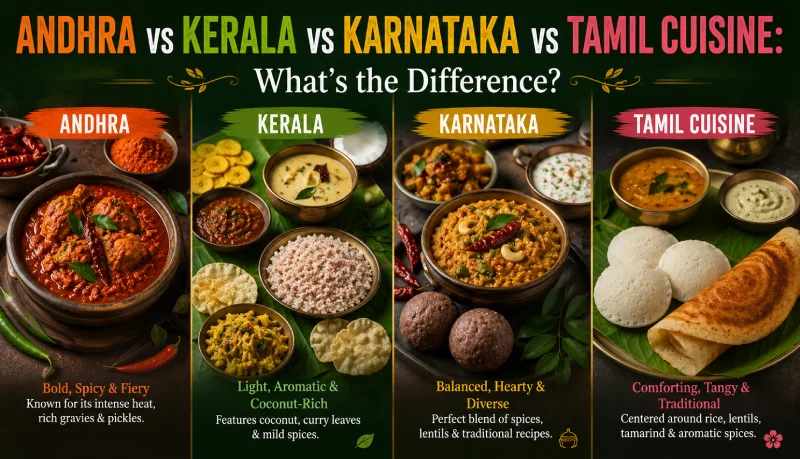
South Indian food is often grouped into one broad category, but anyone who has explored its regional flavours knows that there is no single “South Indian cuisine.” The food traditions of Andhra Pradesh, Kerala, Karnataka and Tamil Nadu are shaped by local crops, climate, communities, history and cooking methods. From fiery Andhra curries to coconut-rich Kerala dishes, comforting Karnataka breakfast plates and tangy Tamil Nadu classics, every region brings something distinct to the table.
Understanding south indian regional cuisine differences makes every dosa, idli, vada, curry and rice meal more enjoyable. While these states share common ingredients such as rice, lentils, curry leaves, coconut, tamarind and spices, the way they use them creates four very different culinary identities.
At Yenna Dosa, guests in Pune can enjoy a delicious journey through the flavours of South India. Our menu celebrates the diversity of regional recipes while bringing together the comforting, authentic taste that makes South Indian food loved across generations.
Why South Indian Cuisine Has So Much Variety
South India is home to varied landscapes, from coastal regions and tropical forests to fertile farmlands and dry inland areas. Naturally, food traditions developed around ingredients that were easily available locally.
Coastal Kerala relies heavily on coconut, rice, fresh vegetables and seafood in its traditional non-vegetarian cuisine. Tamil Nadu uses tamarind, lentils and bold spice blends in many everyday dishes. Karnataka offers a balance of mild sweetness, coconut, lentils and regional grains. Andhra cuisine is widely known for stronger chilli heat, tangy flavours and vibrant spice combinations.
Despite their differences, all four cuisines value freshly prepared food, balanced meals and the art of combining rice, lentils, vegetables and spices into satisfying dishes.
Andhra Food: Bold, Spicy and Full of Character
Andhra food is known for its lively, punchy flavours. It is often considered one of the spicier regional cuisines in India, with red chillies, green chillies, tamarind, garlic and aromatic spice blends playing an important role.
Andhra Pradesh has a strong tradition of rice-based meals, flavourful dals, pickles, chutneys and vegetable curries. A typical meal may include rice, pappu or dal, vegetable curry, rasam, chutney, pickle and curd. The dishes are often designed to offer contrast: spicy, tangy, savoury and cooling elements all appear on the same plate.
Popular Andhra-style dishes include pappu, gongura preparations, pulihora, pesarattu, tomato pappu and spicy vegetable curries. Gongura, a sour leafy green, is one of the most distinctive ingredients in Andhra cuisine. It gives dishes a sharp, tangy flavour that is difficult to replicate with any other leaf.
Andhra cuisine is not only about heat. It is about intensity and balance. Tamarind adds depth, lentils make meals hearty, and pickles provide a strong burst of flavour. For diners who enjoy food with a bold personality, Andhra-inspired dishes are always exciting.
Kerala Cuisine: Coconut, Comfort and Coastal Freshness
Kerala cuisine is known for its use of coconut in many forms: grated coconut, coconut milk, coconut oil and roasted coconut. The state’s tropical climate and long coastline have strongly influenced its food culture, resulting in dishes that feel fresh, aromatic and naturally rich.
Rice is a staple food in Kerala, and meals often feature vegetables, lentils, coconut-based curries, pickles and papad. Traditional vegetarian meals are especially popular during festivals and celebrations, where a variety of dishes may be served on a banana leaf.
Some well-known Kerala dishes include avial, olan, thoran, erissery, sambar, rasam, appam, puttu and Kerala-style vegetable stew. Avial is a mixed vegetable dish cooked with coconut and curd, while thoran is a dry vegetable preparation finished with grated coconut. These dishes highlight Kerala’s ability to create satisfying flavours without relying only on heavy spices.
Kerala food often feels gentler than Andhra cuisine, but it is never plain. Coconut adds creaminess, curry leaves bring fragrance, black pepper offers warmth and fresh vegetables create natural sweetness. The result is a cuisine that feels wholesome, balanced and deeply comforting.
Karnataka Food: Mild, Balanced and Comforting
Karnataka food is diverse because the state includes coastal, northern, southern and Malnad regions, each with its own ingredients and traditions. However, many Karnataka dishes are known for their balanced flavours, subtle sweetness, use of coconut and comforting textures.
Rice, ragi, lentils, jaggery, coconut and seasonal vegetables are important ingredients in Karnataka cooking. In many dishes, a small amount of jaggery is used to soften sourness or spice, creating a gentle sweet-and-spicy balance.
Popular Karnataka dishes include bisi bele bath, mysore masala dosa, ragi mudde, akki rotti, neer dosa, uppittu, vangi bath and various rice preparations. Bisi bele bath is a beloved rice-and-lentil dish made with vegetables and aromatic spices. It is hearty, filling and ideal for anyone who enjoys one-pot comfort food.
Karnataka is also famous for its dosa culture. Mysore masala dosa, for example, is often known for its flavourful red chutney spread inside the dosa before the potato filling is added. Neer dosa, popular in coastal Karnataka, is thin, soft and delicate, made from a smooth rice batter.
Compared with the sharper heat of Andhra food or the tamarind-forward flavours of Tamil cuisine, Karnataka food often feels mellow, rounded and soothing. It is ideal for diners who enjoy layered flavours without excessive spice.
Tamil Nadu Cuisine: Tangy, Aromatic and Tiffin-Focused
Tamil Nadu is one of the most recognisable culinary regions of South India, especially because of its famous tiffin dishes. Idli, dosa, medu vada, pongal, uttapam and filter coffee are closely associated with Tamil food culture.
Tamil Nadu cuisine often uses tamarind, lentils, curry leaves, mustard seeds, asafoetida and freshly ground spice powders. Many dishes have a bright, tangy character, especially rice preparations and gravies such as sambar, rasam and kuzhambu.
A traditional Tamil meal may include rice served with sambar, rasam, poriyal, kootu, curd and pickle. Each item brings a different texture and flavour to the plate. Sambar is hearty and lentil-based, rasam is lighter and peppery, poriyal is a dry vegetable side dish, and kootu combines vegetables with lentils and coconut.
Tamil Nadu dishes comparison often begins with the region’s famous tiffin foods. Idlis are soft and steamed, dosas are crisp or soft depending on the style, vadas are savoury and fried, while pongal is creamy, peppery and comforting. These dishes are commonly served with chutney and sambar, creating a satisfying breakfast or snack.
Tamil cuisine is also admired for its ability to create big flavour from simple ingredients. A tempering of mustard seeds, curry leaves and asafoetida can transform a basic lentil or vegetable dish into something aromatic and memorable.
Andhra vs Kerala vs Karnataka vs Tamil Cuisine: A Quick Comparison
While each cuisine is unique, a simple comparison can help diners understand their defining characteristics.
| Region | Typical Flavour Profile | Common Ingredients | Famous Food Style |
| Andhra Pradesh | Spicy, tangy and bold | Red chillies, tamarind, garlic, gongura, lentils | Pappu, pulihora, pesarattu, spicy curries |
| Kerala | Coconut-rich, fresh and aromatic | Coconut, curry leaves, black pepper, rice, vegetables | Avial, thoran, appam, vegetable stew |
| Karnataka | Mild, balanced and slightly sweet | Coconut, jaggery, ragi, lentils, rice | Bisi bele bath, Mysore dosa, neer dosa |
| Tamil Nadu | Tangy, aromatic and lentil-focused | Tamarind, lentils, mustard seeds, curry leaves, asafoetida | Idli, dosa, sambar, rasam, pongal |
These south indian regional cuisine differences show that South Indian food is much more diverse than many people realise. A dosa may look familiar across regions, but its batter, filling, chutney, spice level and serving style can change completely from one state to another.
The Role of Rice, Lentils and Coconut
Rice and lentils form the foundation of many dishes across all four states. However, each region uses them differently.
Tamil Nadu often combines rice and lentils in tiffin dishes such as idli and dosa, as well as in sambar and pongal. Karnataka uses rice and lentils in bisi bele bath and other comforting meals. Andhra cuisine pairs rice with bold dals, spicy curries and tangy pickles. Kerala uses rice in everyday meals, appams, puttu and festive banana-leaf feasts.
Coconut is another ingredient that creates clear regional differences. Kerala uses coconut very generously, while Karnataka also uses it in chutneys, curries and masalas. Tamil Nadu uses coconut in many chutneys and side dishes, but tamarind and lentils often take centre stage in gravies. Andhra cuisine uses coconut too, though chillies, tamarind and strong spice blends are more defining.
Chutneys, Pickles and Side Dishes Matter
The main dish is only one part of a South Indian meal. Chutneys, podis, pickles and vegetable sides play an equally important role.
Andhra pickles are famous for their strong spice and tang. Kerala side dishes often feature coconut and seasonal vegetables. Karnataka chutneys can include coconut, peanuts, lentils or vegetables, while Tamil Nadu is known for coconut chutney, tomato chutney, mint chutney and podi.
These accompaniments add contrast and make the meal more complete. A plain idli becomes exciting with different chutneys. Rice tastes more satisfying when paired with sambar, rasam, pickle and a vegetable side. This thoughtful balance is one of the reasons South Indian meals feel so complete.
Why Yenna Dosa Celebrates All Four Regional Styles
At Yenna Dosa, South Indian cuisine is not treated as one single flavour. Every region has its own identity, and every dish has its own story. From the spice-forward character of Andhra food to the coconut-rich comfort of Kerala cuisine, the balanced warmth of Karnataka food and the classic tiffin traditions of Tamil Nadu, there is always something new to explore.
For food lovers in Pune, this variety means more than simply having many menu options. It means enjoying the diversity of South Indian cooking in one welcoming place. You can choose a familiar masala dosa one day, explore a regional rice dish another day or pair your favourite tiffin item with fresh chutney and sambar whenever you want a comforting meal.
South Indian cuisine is a celebration of regional ingredients, family recipes and food traditions passed down through generations. The differences between Andhra, Kerala, Karnataka and Tamil Nadu cuisine make the experience richer, more colourful and more delicious.
Discover South India on One Plate at Yenna Dosa
The next time you think of South Indian food, look beyond idli and dosa. Think of Andhra’s fiery chutneys, Kerala’s coconut-rich vegetable dishes, Karnataka’s comforting rice preparations and Tamil Nadu’s tangy sambar and crisp tiffin favourites.
At Yenna Dosa in Pune, every meal is an opportunity to explore these regional flavours. Whether you enjoy spicy food, mild comfort dishes, coconut-based curries or classic dosa and idli combinations, South Indian cuisine has something to offer every palate.
Visit Yenna Dosa and experience how four distinct culinary traditions come together through authentic ingredients, comforting recipes and unforgettable flavours.
-
 Share
Share
-
 0
0
-
 0
0