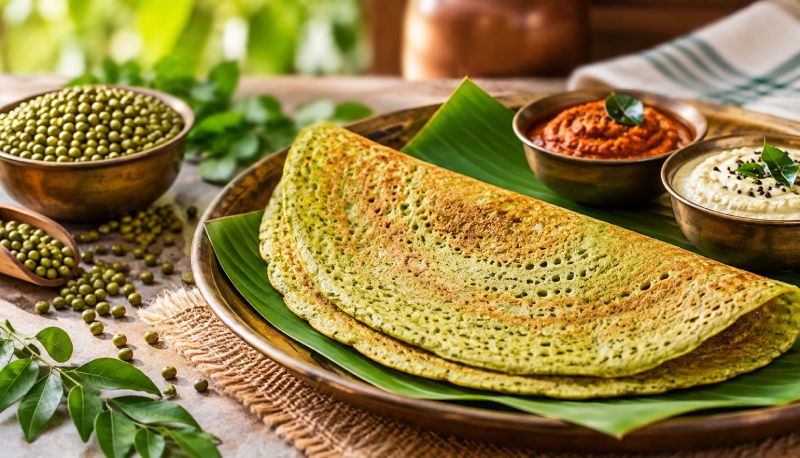
South Indian cuisine is known for its variety of dosas, but not every dosa starts with the familiar combination of rice and urad dal. Pesarattu, a traditional Andhra breakfast, takes a deliciously different approach. Made primarily from whole green gram or green moong, this savoury dosa has an earthy flavour, crisp texture and naturally satisfying character.
Popular across Andhra Pradesh and Telangana, pesarattu is often enjoyed for breakfast or as a tiffin dish. What makes it especially convenient is that it is a no-ferment dosa. The green moong is soaked, ground into a batter and cooked directly on a hot tawa, so there is no need to wait for the batter to ferment overnight.
What Is Pesarattu?
Pesarattu is essentially a traditional green moong dosa prepared using soaked whole green gram. The moong is usually soaked for several hours and then ground with ingredients such as ginger, green chillies, cumin and salt. The resulting batter is spread thinly on a hot tawa and cooked until the surface develops a light crispness.
Unlike traditional dosa batter, pesarattu does not require rice or a lengthy fermentation process. This gives it a distinctive taste and texture while also making it a practical option for home kitchens and restaurants.
The use of green moong gives the dosa a characteristic greenish-golden appearance along with a mildly nutty and earthy flavour. Depending on how the batter is prepared, pesarattu can be made thin and crisp or slightly thicker and softer.
What Makes Pesarattu Different From Regular Dosa?
The biggest difference lies in the main ingredient. Traditional dosa commonly uses fermented rice and urad dal batter, while pesarattu is centred around whole green moong.
Because it is made without fermentation, pesarattu has a different flavour profile. Instead of the mild tang associated with fermented dosa batter, it has a fresh, earthy and slightly nutty taste. Ginger, cumin and green chilli further enhance its flavour.
It is also a versatile dish. The batter can be spread plain or topped with finely chopped onions, green chillies, coriander and other ingredients before cooking. This allows the simple green moong dosa to be adapted to different tastes while retaining its traditional character.
Pesarattu Upma: A Classic Andhra Combination
One of the most popular ways to enjoy pesarattu is with pesarattu upma. In this preparation, freshly cooked upma is placed inside the green moong dosa before it is folded and served.
The combination works particularly well because of the contrast in textures. The dosa provides crisp edges and a slightly chewy centre, while the upma adds a soft and comforting filling. The result is a wholesome and filling Andhra breakfast that has become a favourite beyond the region as well.
Pesarattu can also be served on its own when you want a lighter meal or paired with different chutneys for additional flavour.
Why Is Ginger Chutney Served With Pesarattu?
A traditional serving of pesarattu is often accompanied by ginger chutney, also known as allam pachadi. Ginger brings a sharp, warming flavour that complements the earthy taste of green moong.
Depending on the recipe, the chutney may combine ginger with ingredients such as tamarind, red chillies, jaggery, lentils and spices. Its balance of spicy, tangy and slightly sweet flavours provides a strong contrast to the mild dosa.
For many people, the combination of hot pesarattu and freshly prepared ginger chutney is what makes this Andhra breakfast particularly memorable.
Is Pesarattu a Healthy Breakfast Option?
Green moong is naturally valued as a source of plant-based protein and dietary fibre. Since pesarattu is primarily made from soaked and ground green gram, it can be a satisfying addition to a balanced breakfast.
It is also a useful alternative for people who want to explore dosa varieties beyond conventional rice-based preparations. Since the batter does not require fermentation, it can be prepared without planning for the previous night.
Of course, the overall nutritional value depends on the ingredients, portion size and cooking method used. Adding vegetables or pairing the dosa with chutney can create an even more varied breakfast plate.
How Is Pesarattu Traditionally Enjoyed?
Freshly cooked pesarattu is best served hot, when its edges are crisp and its aroma is at its peak. It can be enjoyed with ginger chutney, coconut chutney, sambar or other accompaniments depending on personal preference.
For a more substantial meal, pesarattu upma makes an excellent filling. Chopped onions, coriander and green chillies can also be added while the dosa cooks, giving every bite a little extra crunch and freshness.
The beauty of pesarattu lies in its simplicity. A few everyday ingredients, a well-heated tawa and the right cooking technique are enough to create a distinctive regional dosa.
Experience the Flavours of Andhra Breakfast
Pesarattu is more than just another variety of dosa. It represents the diversity of South Indian breakfast traditions, where simple ingredients are transformed into dishes with distinctive regional flavours.
From its earthy green moong base and crisp texture to the bold flavour of ginger chutney and the comforting filling of upma, every element has a purpose. Whether you are discovering Andhra cuisine for the first time or already enjoy traditional tiffin dishes, pesarattu is a delicious way to experience the flavours of Andhra.
At Yennadosa, exploring regional dosa varieties is an opportunity to discover how different ingredients, cooking methods and accompaniments create completely different breakfast experiences. If you enjoy dosa, the protein-rich, no-ferment character of pesarattu is one Andhra speciality worth trying.
-
 Share
Share
-
 0
0
-
 0
0