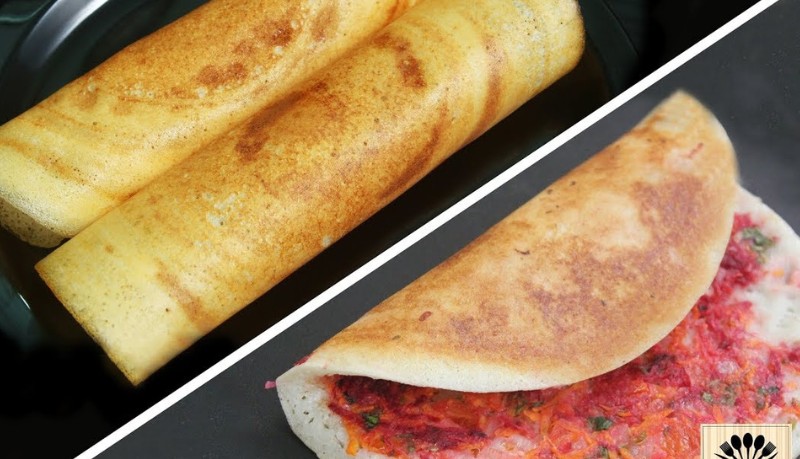
South Indian cuisine is a treasure trove of flavorful, nutritious, and versatile dishes. Two of its most beloved staples—uttapam and dosa—often spark curiosity among food lovers: What’s the real difference between them? Though they share some ingredients and cultural roots, uttapam and dosa differ in texture, taste, preparation, and how they fit into your daily breakfast choices.
Whether you’re comparing dosa vs pancake or exploring South Indian dishes’ differences, this guide will help you clearly understand how these two classics stack up.
What Are Uttapam and Dosa?
Dosa: The South Indian Crepe
Dosa is a thin, crispy crepe made from a fermented batter of rice and urad dal (split black gram). It’s typically served hot off the griddle with coconut chutney, sambar, and sometimes spicy potato masala. Think of it as the South Indian cousin of the pancake, only thinner and crispier.
Uttapam: The South Indian Pancake
Uttapam, in contrast, is thicker and fluffier—often likened to a blend between a pancake and a pizza. Made from the same batter as dosa, it’s topped with onions, tomatoes, chilies, or mixed vegetables, offering a wholesome, colorful twist.
Uttapam vs Dosa: Key Differences
Let’s break down the major contrasts between these two dishes.
1. Texture and Thickness
- Dosa: Thin, lacy, and crispy around the edges. Almost paper-like.
- Uttapam: Thick, spongy, and soft. Similar to an American-style pancake in form but savory.
2. Preparation Style
- Dosa: Batter is spread thin on a hot tawa (griddle) using circular motions. Cooks quickly on one side.
- Uttapam: Batter is poured thicker, left to cook slowly. Often topped with vegetables before flipping.
3. Cooking Time
- Dosa: Takes about 1–2 minutes to make.
- Uttapam: Requires 3–5 minutes due to thickness and toppings.
4. Taste and Flavor
- Dosa: Light, crisp, and slightly tangy due to fermentation. Flavor often comes from the chutneys or stuffing.
- Uttapam: More savory and hearty, thanks to the toppings. Has a denser bite and a fuller taste.
5. Nutritional Value
NutrientDosa (1 serving)Uttapam (1 serving)
Calories ~120–150 ~180–220
Carbs Moderate Higher (due to toppings)
Protein Moderate Moderate
Fiber Low Higher (especially with veggie toppings)
Fat Low Low to moderate
Note: Nutrition varies based on preparation and added ingredients.
Which Is Healthier: Uttapam or Dosa?
Both are healthy choices, especially compared to fried or processed breakfasts. However, here’s how they compare from a nutrition standpoint:
- Uttapam is more filling due to its thickness and toppings. It’s great for those looking for a balanced meal with more fiber and micronutrients.
- Dosa is lighter, lower in calories, and ideal for those watching their carb intake or preferring something crisp and quick.
Tip: To boost nutrition, try adding oats or millets to the batter or using minimal oil during preparation.
When to Choose What?
Here’s a quick guide on breakfast choices between uttapam and dosa:
Your MoodGo For
Light & Crisp Dosa
Filling & Savory Uttapam
On-the-Go Plain dosa or masala dosa (easy to roll)
Weekend Treat Veg uttapam with sambar
Kids’ Lunchbox Mini uttapams with cheese or corn
Common Variations You’ll Love
Dosa Variants:
- Masala Dosa: Stuffed with spicy potato filling.
- Set Dosa: Light, fluffy dosas served in a trio—perfectly soft and satisfying.
- Rava Dosa: Made from semolina; thin and crispy with a lacy texture.
Uttapam Variants:
- Onion Uttapam: A crowd favorite, topped generously with finely chopped onions.
- Tomato Uttapam: Tangy twist with slices of tomato.
- Mixed Veg Uttapam: Bursting with vibrant veggies like carrots, capsicum, onions, and green chilies for a flavorful bite.
- Cheese Uttapam: A hit among kids, similar to an Indian pizza.
How to Make Them at Home: A Simple Guide
Dosa – Quick Steps:
- Soak: Combine rice and urad dal in a 4:1 ratio and soak for 6–8 hours.
- Grind: Into a smooth batter. Add salt.
- Ferment: Leave overnight to rise.
- Cook: Pour and spread on hot tawa. Drizzle a few drops of oil. Cook till crisp.
Uttapam – Quick Steps:
- Use the same fermented batter.
- Pour thick layer onto the tawa.
- Top with veggies (onions, tomatoes, chilies).
- Cover and cook over medium heat until the bottom turns golden brown.
- Flip gently and cook the other side briefly.
Tip: No time to ferment? Use ready-made dosa batter from stores or add a pinch of fruit salt to speed things up.
Fun Fact: Dosa vs Pancake – The Global Analogy
While a Western pancake is sweet and served with syrup, dosa is its crispier, savory cousin. Uttapam, with its savory toppings and pillowy center, offers a delightful fusion of pancake texture and pizza appeal—uniquely Indian and irresistibly comforting.
Final Thoughts: Dosa or Uttapam – Which One Wins?
There’s no clear winner in the uttapam vs dosa debate—it all depends on your preferences. If you’re in the mood for something light and crisp, dosa is your go-to. But if you want a more substantial, veggie-packed meal, uttapam is hard to beat.
Both are flavorful, nourishing, and effortlessly fit into your everyday routine.Why pick just one when you can indulge in the best of both worlds?
Quick Recap
- Dosa = Thin, crisp, crepe-like. Light breakfast option.
- Uttapam = Thick, soft, and topped. Hearty and filling.
- Same batter, different cooking styles.
- Both great for different moods and meals.
So next time you’re exploring South Indian dishes, you’ll know exactly what to expect from each—and how to enjoy them your way!
Craving Authentic Dosa or Uttapam in Pune?
Come experience the rich flavors of South India at Yenna Dosa!
📍 Address: Otta No 248, Opp Kothari Block, Bibvewadi, Pune, Maharashtra 411307
📞 Call to order or reserve: +91 7522909090
🌐 Visit us online: https://yennadosa.com/
Whether you’re in the mood for a crispy masala dosa or a veggie-loaded uttapam, we’ve got the perfect plate waiting for you. Order now or drop by for a delicious experience!
-
 Share
Share
-
 0
0
-
 0
0