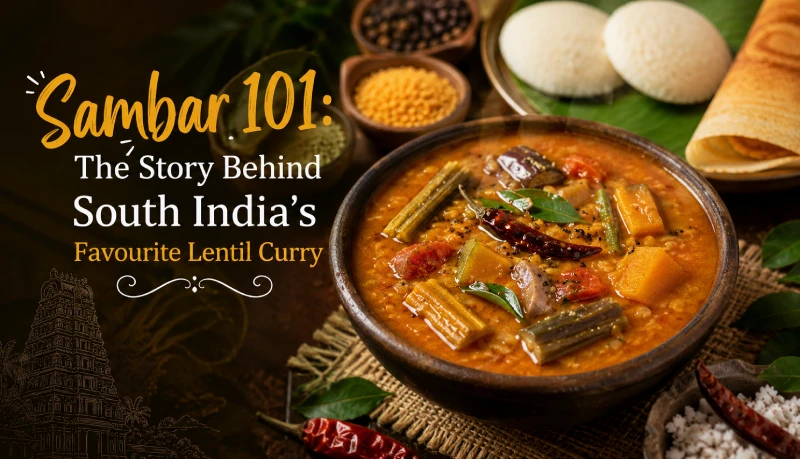
A warm bowl of south Indian sambar has a way of making every meal feel complete. It may arrive beside soft idlis, crisp dosas, fluffy vadas or a generous serving of steamed rice, but sambar is never just a side dish. It is a comforting blend of lentils, vegetables, tamarind, spices and tradition that has earned a permanent place on dining tables across South India and beyond.
At Yenna Dosa, authentic South Indian food is all about bringing familiar flavours, wholesome ingredients and regional food traditions together. Among the many dishes that define South Indian cuisine, sambar remains one of the most loved. Its rich aroma, balanced tanginess and nourishing texture make it suitable for breakfast, lunch or dinner.
This guide explores the story, ingredients, regional styles and irresistible appeal of the humble yet unforgettable sambar.
What Is South Indian Sambar?
South Indian sambar is a flavourful lentil-based curry made primarily with toor dal, vegetables, tamarind and a special blend of roasted spices known as sambar powder. It is known for its unique balance of tastes: mild sweetness from vegetables, tanginess from tamarind, warmth from spices and a savoury depth from cooked lentils.
Unlike a thick North Indian dal, sambar has a more pourable consistency. It is often served hot with idli, dosa, medu vada, uttapam, pongal or rice. The vegetables may vary according to season, region and household preference, which means every bowl of sambar can offer a slightly different experience.
For many people, sambar is the taste of home. It is comforting, filling, nutritious and wonderfully versatile.
The Fascinating Origin of Sambar
The vegetable sambar recipe origin is surrounded by interesting food stories and regional legends. One popular tale links sambar to the royal kitchens of the Maratha ruler Sambhaji Maharaj. According to this story, a cook attempted to prepare a lentil dish in the absence of a key ingredient and added tamarind instead. The resulting preparation was said to be named after Sambhaji and gradually became known as sambar.
While the exact historical origin may be debated, there is no doubt that sambar developed into an essential part of South Indian cuisine. Over generations, cooks across Tamil Nadu, Karnataka, Andhra Pradesh, Telangana and Kerala adapted the dish to local ingredients and culinary traditions.
Today, sambar is enjoyed not only in homes but also in restaurants, canteens, wedding feasts and festive meals. It has travelled far beyond South India and is now loved by food enthusiasts across India and around the world.
The Heart of Sambar: Toor Dal Curry
At the centre of every good sambar is a comforting toor dal curry. Toor dal, also known as pigeon peas, gives sambar its body, mild nuttiness and satisfying texture. The dal is pressure-cooked until soft and then blended with vegetables, tamarind water and spices.
Toor dal is widely appreciated in Indian cooking because it is filling and rich in plant-based protein. When paired with rice, idli or dosa, it creates a wholesome meal that feels both light and nourishing.
The texture of the dal matters greatly. It should be cooked until soft enough to blend smoothly into the curry, but the final sambar should still have a pleasant, flowing consistency. A well-made sambar is neither too watery nor too thick. It should coat the idli, soak beautifully into a vada and complement rice without becoming heavy.
Tamarind: The Tangy Soul of Sambar
One of the defining ingredients in traditional sambar is tamarind. A classic tamarind sambar gets its signature tang from soaked tamarind pulp, which adds brightness and depth to the lentil base.
Tamarind does much more than make the curry sour. It balances the earthy flavour of toor dal, enhances the sweetness of vegetables and brings the spices together. Without tamarind, sambar can taste flat. With the right amount, it becomes lively, aromatic and deeply satisfying.
The amount of tamarind used changes from one region to another. Tamil-style sambar often has a bold, noticeable tang, while some Karnataka-style versions may feel slightly sweeter and gentler. In Kerala, the choice of vegetables and coconut-based elements can create a different flavour profile altogether.
This variation is what makes South Indian food so exciting. One dish can have many regional personalities while still remaining recognisably sambar.
Why Sambar Powder Makes All the Difference
The magic of sambar lies in its spice blend. Sambar powder is not simply one spice; it is a carefully balanced mixture that gives the dish its unmistakable aroma and warmth.
Traditional sambar powder commonly includes ingredients such as coriander seeds, dried red chillies, cumin, fenugreek seeds, black pepper, chana dal, urad dal, mustard seeds and curry leaves. These ingredients are roasted to release their natural oils and then ground into a fragrant powder.
Every home and restaurant may have its own version of sambar powder. Some prefer a stronger chilli flavour, while others add more coriander for earthiness or more fenugreek for a slightly bitter, complex finish. The best blends are aromatic rather than overwhelmingly spicy.
Freshly prepared sambar powder can transform a simple lentil curry into something memorable. Its fragrance is often the first thing people notice when a hot bowl of sambar reaches the table.
Vegetables That Bring Sambar to Life
Vegetables are not merely additions to sambar; they contribute character, colour and sweetness. Depending on the season and regional style, sambar may include drumsticks, pumpkin, brinjal, okra, carrots, radish, onions, tomatoes, bottle gourd or ash gourd.
Drumstick sambar is especially popular because the vegetable adds a distinct aroma and a slightly sweet, earthy flavour. Small onions or shallots are another favourite, particularly in Tamil Nadu-style preparations. Pumpkin can make the curry naturally sweeter, while brinjal absorbs the spices beautifully.
The choice of vegetables also reflects the practical nature of South Indian cooking. Sambar is an excellent way to use fresh produce available at home while creating a complete and nutritious meal.
Regional Variations of Sambar Across South India
Sambar may be one dish, but its flavours shift beautifully from state to state.
Tamil Nadu Sambar
Tamil Nadu is often closely associated with classic sambar. It is commonly tangy, aromatic and made with a robust spice blend. Tiffin sambar, served with idli and dosa, may be slightly thinner and smoother, while rice sambar can be fuller with more vegetables.
Karnataka Sambar
Karnataka-style sambar often has a gentler sweetness. Some versions use a touch of jaggery and may include coconut in the masala. The flavour is balanced, comforting and ideal with rice, vada or traditional Karnataka breakfast dishes.
Kerala Sambar
Kerala sambar can include a generous mix of vegetables and may feature coconut in some regional preparations. It is often served as part of a traditional vegetarian meal and pairs wonderfully with rice.
Andhra-Style Sambar
Andhra-inspired sambar may have a stronger chilli presence and a bolder flavour. It can be tangier and spicier, reflecting the region’s love for vibrant, punchy food.
These variations show why sambar remains endlessly interesting. Each bowl carries the food traditions of its region while still offering the comfort people expect from this beloved lentil curry.
Sambar and South Indian Breakfast: A Perfect Pairing
There are few combinations as satisfying as hot idlis with fresh sambar. The soft, steamed texture of idli absorbs the curry beautifully, creating a light yet filling meal. Dosa with sambar offers a different experience: the crisp dosa adds contrast to the warm, flavourful curry.
Medu vada and sambar are another classic pair. The crunchy outside and soft centre of the vada make it ideal for dipping. In fact, many food lovers believe that a vada becomes even better after soaking in sambar for a few moments.
At Yenna Dosa, South Indian favourites such as idli, vada, rava items, rice dishes and dosa varieties celebrate the comforting food culture that makes sambar so special. Whether you prefer a quick breakfast, a relaxed lunch or a satisfying evening meal, a well-prepared bowl of sambar can bring the entire plate together.
Why Sambar Is Loved Beyond South India
Sambar has become popular across India because it offers so much in one dish. It is vegetarian, flavourful, nourishing and easy to pair with many foods. It can be light enough for breakfast and hearty enough for lunch.
It also appeals to people looking for wholesome meals. Lentils provide protein, vegetables add fibre and essential nutrients, and spices bring flavour without relying on heavy cream or rich gravies. When served with fermented foods such as idli and dosa, it becomes part of a balanced and satisfying meal.
For people in Pune who enjoy authentic South Indian cuisine, sambar offers a familiar taste that never feels repetitive. Each serving can be enjoyed differently: with rice one day, idli the next and crispy vada on another occasion.
What Makes a Great Sambar?
A memorable sambar depends on balance. The lentils should be soft, the vegetables should be cooked but not mushy, the tamarind should add tang without overpowering the dish, and the spice blend should be aromatic rather than harsh.
The final tempering is equally important. Mustard seeds, curry leaves, dried red chillies and asafoetida are often added to hot oil or ghee before being poured over the curry. This tempering gives sambar its final burst of aroma and flavour.
A great sambar should feel warm, comforting and layered. The first spoonful may reveal the tanginess of tamarind, followed by the earthiness of dal, the sweetness of vegetables and the fragrance of roasted spices.
Enjoy Authentic South Indian Sambar at Yenna Dosa
South Indian cuisine is built on recipes that are simple in concept but rich in technique, patience and flavour. Sambar is one of the finest examples of this tradition. From the humble toor dal curry base to the aroma of fresh sambar powder and the tang of tamarind, every element has a purpose.
At Yenna Dosa, diners can enjoy authentic pure-vegetarian South Indian food that reflects the diverse culinary traditions of the southern states. Whether you are ordering idli, dosa, vada or a comforting rice dish, sambar remains an essential part of the experience.
The next time you enjoy a bowl of south indian sambar, remember that you are tasting more than lentils and vegetables. You are enjoying a recipe shaped by generations of home cooks, regional ingredients and the timeless love for warm, nourishing food.
Visit Yenna Dosa in Pune and discover why this classic lentil curry continues to be one of South India’s most cherished flavours.
-
 Share
Share
-
 0
0
-
 0
0