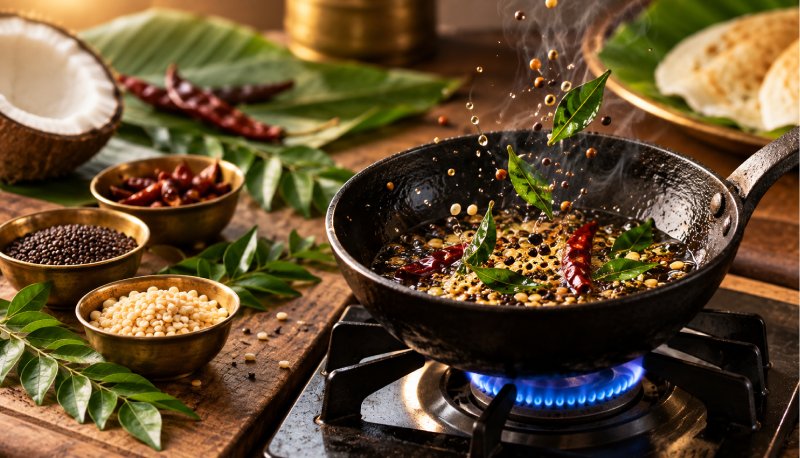
There is a moment in South Indian cooking that can instantly change the character of a dish: the sound of mustard seeds crackling in hot oil, followed by the aroma of curry leaves, dried red chilli and roasted lentils. This simple technique is called tadka, or tempering, and it is one of the foundations of South Indian flavour.
Known by regional names such as thalippu in Tamil, oggarane in Kannada and thalimpu or popu in Telugu, tempering involves briefly heating spices and aromatics in oil before adding them to a dish or using them as the base for cooking.
It may take less than a minute, but getting the heat, ingredients and order right can make a noticeable difference to the final dish.
What Is South Indian Tempering?
South Indian tempering is the process of blooming whole spices, lentils, chillies and aromatics in hot oil. The seasoned oil can then be mixed into dishes such as sambar, rasam, chutneys, rice preparations, vegetable dishes and yogurt-based recipes.
The technique works because heating spices in fat helps release and carry their aromatic compounds. Instead of simply adding spices to a cooked dish, tempering allows their flavours and aromas to infuse into the oil before being distributed throughout the food.
Tempering can happen at the beginning of cooking or as a finishing step. A finishing tadka is especially effective when you want the fresh aroma of the spices to remain noticeable on the surface of the dish.
The Essential Ingredients in a South Indian Tadka
While recipes vary between regions and households, several ingredients appear repeatedly in South Indian tempering.
Mustard Seeds
Mustard seeds are often the first ingredient to enter the hot oil. Their familiar popping sound is one of the signatures of South Indian cooking. The seeds need enough heat to crackle and release their characteristic aroma before the next ingredients are added.
Urad Dal
Split urad dal adds more than flavour. When fried until lightly golden, it provides a pleasant nutty taste and a subtle crunch. It is particularly common in tempering for chutneys, rice dishes and vegetable preparations.
Curry Leaves
Fresh curry leaves bring a distinctive aromatic quality to South Indian dishes. They are usually added after the initial spices and lentils and should only be cooked briefly because they can burn quickly.
Dried Red Chilli
Whole dried red chilli contributes warmth, colour and a lightly smoky character. It can be added according to the desired level of heat and is often broken into pieces before going into the oil.
Hing
A small pinch of hing, or asafoetida, can provide a deep savoury aroma. Because hing is potent and can become overpowering or bitter if cooked for too long, it is generally used sparingly and added toward the end of the tempering process.
Oil
The choice of oil also influences the final flavour. Neutral oils work well for everyday cooking, while coconut oil is particularly associated with many preparations from Kerala and parts of coastal South India. The fat acts as the medium that carries the aromas of the tempered ingredients.
The Right Order for Tadka
The order of ingredients is not simply a matter of tradition. Each ingredient needs a different amount of time in the hot oil.
A commonly used sequence begins with heating the oil and adding mustard seeds. Once they begin to pop, urad dal or chana dal can be added and fried until lightly golden. Dried red chilli follows, with curry leaves added carefully because they can splutter when they come into contact with hot oil.
Hing is usually added toward the end, when the pan is still hot but the ingredients do not have enough time to burn. The finished tempering can then be poured over the prepared dish or used immediately as the cooking base.
The exact sequence can change depending on the recipe. The basic principle is simple: ingredients that need longer cooking go in first, while delicate ingredients go in later.
Why Does Tadka Make Such a Difference?
Imagine a bowl of cooked rice, a simple coconut chutney or a pot of sambar without any finishing tempering. It may still taste good, but the aroma and texture can feel less layered.
A fresh tadka introduces several elements at once. Mustard seeds provide their characteristic pungency, urad dal contributes nuttiness and crunch, curry leaves add fragrance, dried chilli brings warmth, and hing provides another layer of savoury aroma.
The oil then distributes these flavours through the dish. This is why a small amount of tempering can have such a noticeable effect without requiring a long list of spices.
Tadka in Sambar, Chutney and Rice
One of the strengths of South Indian tempering is its versatility.
In sambar, tempering can reinforce the dish’s spice and aromatic profile with mustard seeds, curry leaves, dried chilli and hing. In rasam, a lighter tempering can complement the tangy broth without overwhelming it.
Chutneys are another classic example. Coconut, peanut or lentil-based chutneys can be finished with crackling mustard seeds, urad dal, curry leaves and dried chilli. The result adds both aroma and texture to an otherwise smooth preparation.
For rice dishes, tempering can turn simple cooked rice into a more flavourful preparation. Lemon rice, curd rice and other South Indian rice dishes commonly use tempered ingredients to provide contrast and fragrance.
Opening Tadka vs Finishing Tadka
There are two broad ways to use tempering.
An opening tadka is prepared at the beginning of cooking. The spices are bloomed in oil and other ingredients are then added to the same pan. This allows the flavoured oil to become part of the foundation of the dish.
A finishing tadka is prepared separately and poured over food that is already cooked. This approach keeps the aroma of the freshly tempered ingredients more prominent and is particularly common with dishes such as chutneys, rasam, sambar and curd-based preparations.
Neither method is universally better; the choice depends on the dish and the flavour you want to highlight.
Common Tadka Mistakes to Avoid
Tempering is quick, so small mistakes can have a big impact. Using oil that is not hot enough may leave mustard seeds underdeveloped and lentils pale. On the other hand, excessive heat can quickly burn curry leaves, lentils, chillies or hing.
Another common mistake is adding every ingredient at once. Since each component cooks at a different speed, following an appropriate sequence gives you better control over flavour and texture.
It also helps to keep all ingredients measured and ready before heating the oil. Once the mustard seeds begin popping, the entire process moves quickly.
The Small Step That Defines a Big Cuisine
Tadka demonstrates an important idea in South Indian cooking: flavour does not always require complexity. A spoonful of hot oil, a few mustard seeds, some urad dal, curry leaves and chilli can transform a simple dish through timing and technique.
From thalippu and oggarane to the many regional variations found across South India, tempering remains an everyday culinary tradition. It brings aroma, texture and depth to familiar dishes while allowing each household and region to develop its own version.
At Yennadosa, understanding these small culinary details makes South Indian food even more enjoyable. The next time you hear mustard seeds crackling and curry leaves sizzling in hot oil, you will know that the tadka is not just a garnish—it is the finishing touch that helps bring the dish to life.
-
 Share
Share
-
 0
0
-
 0
0